
Hall County Court Records After Arrest
Court records after a jail arrest in Hall County follow a different path than the jail booking. The Hall County Sheriff's Office runs the local jail and may be the first place to confirm whether a person is still in custody. The court record begins when the accusation is placed into a court file, usually through a complaint, information, or indictment. For felony matters, the official district court source is the 100th District Court, a multi-county court serving Carson, Childress, Collingsworth, Donley, and Hall Counties. The Hall County courtroom is listed at the courthouse in Memphis, and the court page describes felony criminal jurisdiction.
The prosecutor side also matters. The 100th Judicial District Attorney is Luke M. Inman, whose office is listed in Wellington. Felony charges after a Hall County jail arrest generally move through that district attorney and district court framework. The Hall County Attorney page names Harley Caudle at the courthouse, but it does not publish a full criminal-division outline. For custody or booking detail, use Hall County jail inmate records. For booking photos, use Hall County jail mugshots. The court case itself is the better record for filed charges, settings, warrants tied to the case, plea status, and disposition.
The district court source shows where felony court records after an arrest are heard. The Hall County District Court page identifies the courtroom and the felony-court role.
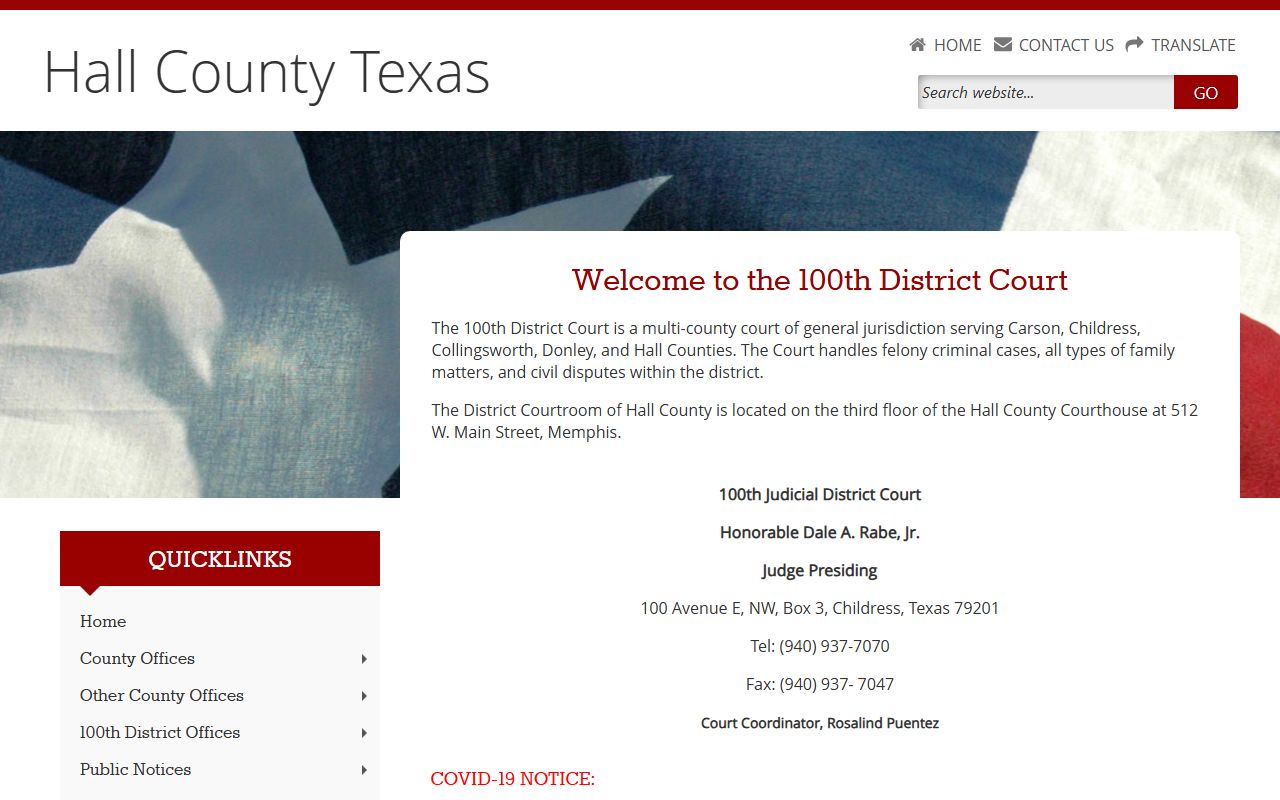
That court page is the local anchor for felony cases, while the clerk and online records system are the practical search channels for case files.
Find Hall County Court Records
The Hall County & District Clerk is the main local access point for court records after a jail arrest. The clerk page lists Pat Snider at 512 W. Main Street, Suite 8, Memphis, Texas 79245, with telephone 806-259-2627 and fax 806-259-5078. The posted office hours are Monday through Thursday from 8:30 to 5:00 and Friday from 8:30 to 12:00. That office links the public to LGS Online Records Search and also provides a public-information request contact form. The clerk page adds a local caveat: research access may be limited while the office is in the Annex building because records are in offsite storage, so appointment scheduling may be needed for records research.
The official clerk source is useful because Hall County does not publish a full jail booking database. A person may be booked into jail before the final court charge is filed. The clerk record can show the case number, filed charge, court level, current status, and settings after the arrest. If an online search does not surface a case, contact the clerk with the defendant's name, date of birth if known, approximate arrest date, arresting agency, and any case number or warrant number already known.
The Hall County & District Clerk page is the county source that points users to online records, public-information requests, e-filing notes, and appointment limits.
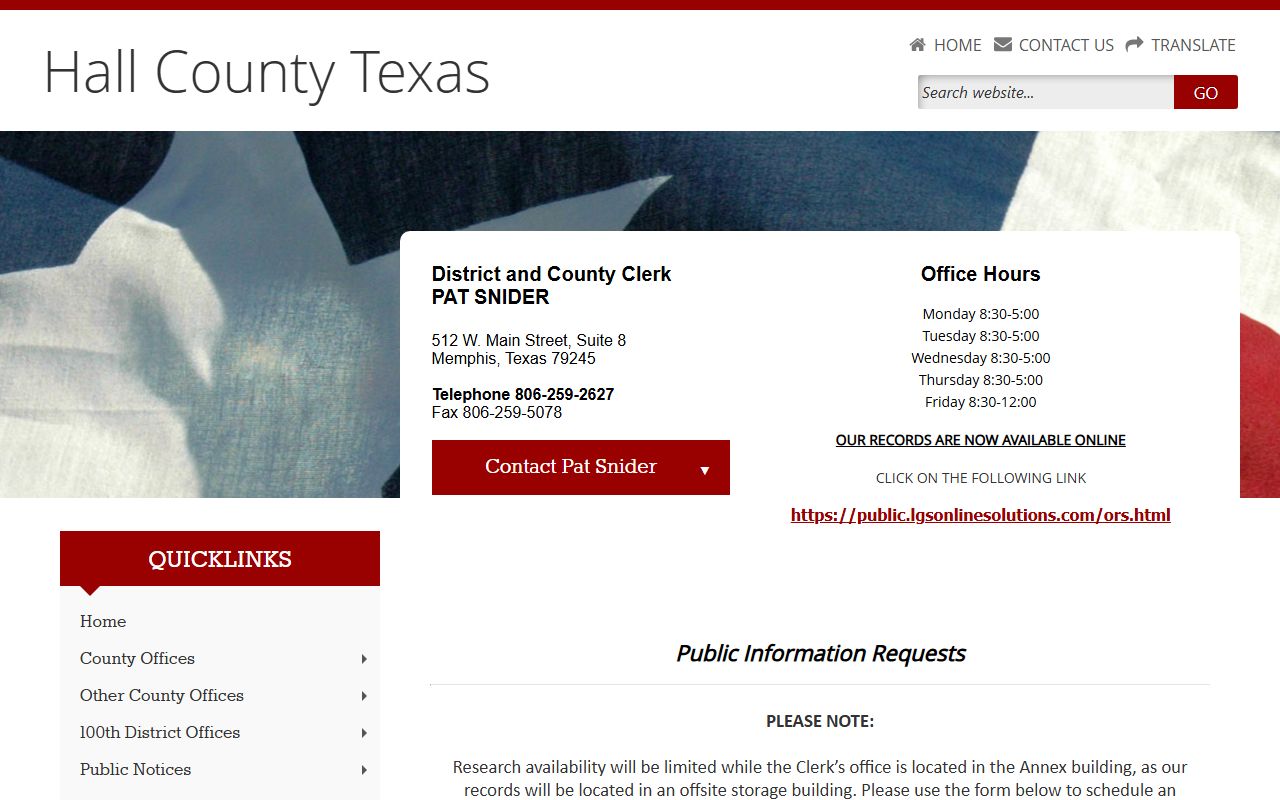
Use the clerk page to choose between the online LGS route, a direct clerk contact, and a scheduled research appointment when older records are not easy to reach.
Hall County LGS Records Search
The clerk page states that Hall County records are available online and links to LGS Online Records Search. The visible LGS layer shows an account login and a guest-login option. Because the visible public layer is a login frame, the right expectation is account or guest navigation, not a simple one-box jail roster search. For court records after a jail arrest, search by name first if the case number is not known. Then compare dates, court level, and party names so a person with a common name is not confused with another defendant.
| Visible LGS Field | Type | Use for Court Records After Arrest |
|---|---|---|
| Email Address | Text | Account login credential when using registered access. |
| Password | Password | Account login credential, not a public case-search field by itself. |
| Login | Button | Opens an account session for available records. |
| Guest Login | Button or link | Public route visible on the portal for non-account access. |
| Forgot Your Password? | Link | Account recovery, not a case-record lookup tool. |
The LGS Online Records Search login frame is the portal named by the Hall County clerk for online records.
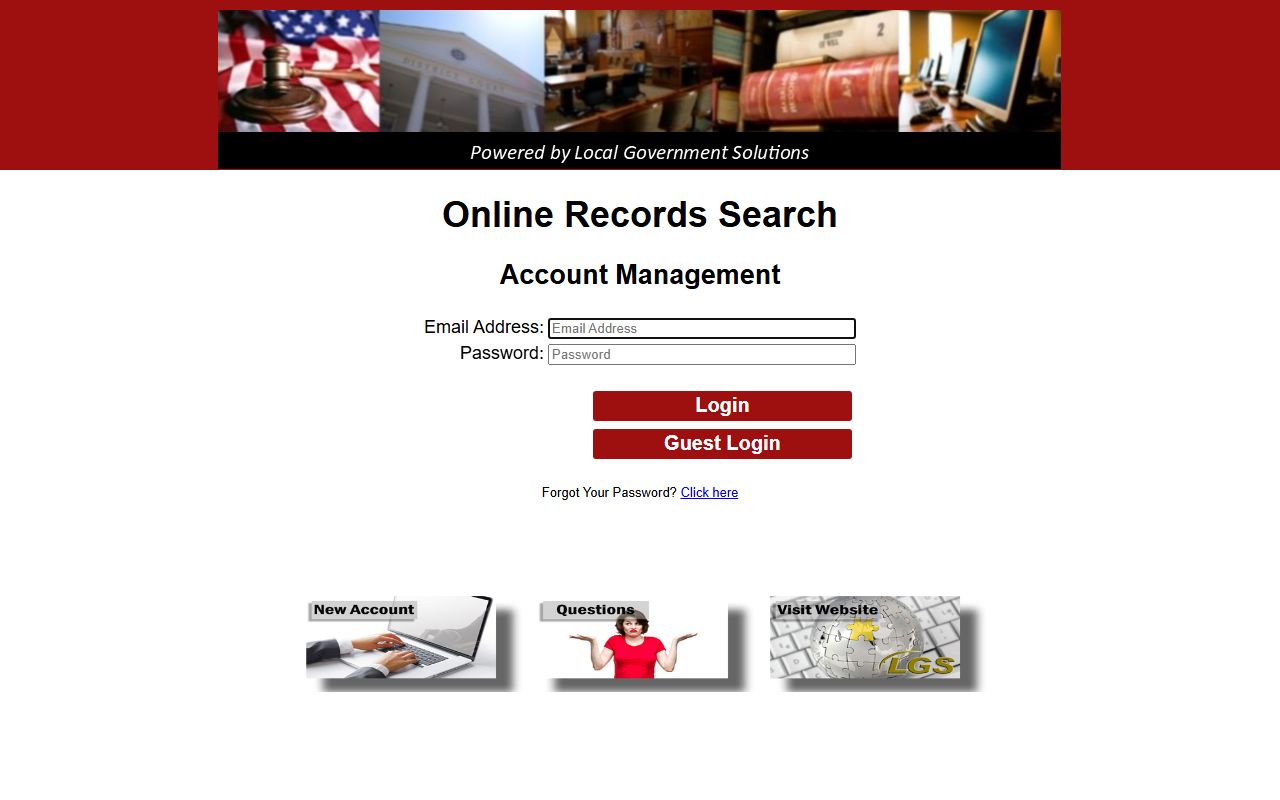
The login frame explains why a Hall County court record search may require a guest session or account step before the case index appears.
Search Court Records After Arrest
A clean search starts with the arrest, then moves to the filing office. The jail can help confirm whether a person was booked, released, or transferred. The court record tells whether the prosecutor filed a case and what happened after filing. Do not treat the booking charge as the final charge. It may be amended, reduced, dismissed, or replaced by a later charging instrument.
- Confirm the Hall County jail arrest with the sheriff if current custody or release status is still unclear.
- Identify the likely court level. Felony cases are tied to the 100th District Court, while lower-court matters may involve justice court or county-level process.
- Search LGS through the clerk's online records link, or contact the clerk with name, date of birth if known, arrest date, and case number if available.
- Open the case record and compare the filed charge, case status, bond entries, warrant entries, settings, and disposition fields.
- Use the prosecutor and court contacts when the record shows a pending felony, capias, indictment, plea setting, or unresolved disposition.
For statewide context, re:SearchTX may show records from participating courts based on account and role. Hall County's local official route remains the clerk's LGS link and direct clerk contact. The clerk also links e-filing resources, including eFileTexas, which matter more for filing documents than for casual case lookup.
Hall County Arrest Charging Records
Charging documents explain why court records after an arrest may not match the first jail entry. A complaint can start the process close to the arrest. An information is filed by a prosecutor. An indictment is returned by a grand jury and is common in felony practice. In Hall County, felony charges connect to the 100th District Court and the 100th Judicial District Attorney. Justice court contacts may matter for lower-level matters, including JP Precinct 1, 2, and 3 in Memphis and JP Precinct 4 in Turkey.
| Document | Who Creates It | What It Means After Arrest |
|---|---|---|
| Complaint | Officer or prosecutor | A sworn accusation that may begin the case or support early court action. |
| Information | Prosecutor | A prosecutor-filed charge that may replace or refine the booking charge. |
| Indictment | Grand jury | A formal felony accusation that can control the district court case. |
These documents are not the same as a jail roster line. A jail booking records custody. A charging document records the case that a court must handle. That distinction is the core reason to search court records after a Hall County arrest rather than relying on booking information alone.
Hall County Charge Status
Charge status tells what has happened to the court case since the arrest. A pending charge is unresolved. An amended charge has changed from an earlier filing. A reduced charge is resolved or replaced at a lower level. A dismissed charge ended without a conviction on that count. A conviction is a final adjudication or guilty finding or plea, not the same thing as a booking or arrest.
| Status | Plain Meaning | Search Caution |
|---|---|---|
| Pending | The filed court case is still open. | Check settings and bond terms before assuming release or outcome. |
| Amended | The charge wording or count has changed. | Compare old and current counts in the case record. |
| Reduced | A lower charge replaced or resolved a higher charge. | The booking charge may still look more serious than the final court record. |
| Dismissed | The charge or case ended without conviction. | Dismissal does not automatically erase all public record traces. |
| Convicted | A plea or finding resulted in conviction. | Use the final disposition and, if prison transfer occurred, the TDCJ search. |
Bond After Hall County Arrest
Bond information can appear in both jail and court contexts. Texas Code of Criminal Procedure Article 15.17 governs the post-arrest magistrate-warning process, where rights, accusation information, and bond issues are addressed. Texas Code of Criminal Procedure Chapter 17 governs bail. Hall County does not publish a jail bond desk page, payment vendor, or local bond schedule in the official materials reviewed, so local logistics should be confirmed with the sheriff before any payment attempt.
| Bond Type | How It Works | Why It Matters in Court Records |
|---|---|---|
| Cash bond | Money is paid directly under court rules. | The case may show bond amount and release conditions. |
| Surety bond | A bondsman or surety posts the bond. | The case may show surety entries and forfeiture risk after missed court. |
| Personal bond | Release is based on promise and conditions rather than full cash up front. | The court record may list reporting terms or limits. |
| No-bond hold | Payment alone will not release the person. | A warrant, detainer, parole hold, or court order may control custody. |
Bond can change after magistrate review, prosecutor filing, warrant clearance, or another agency hold. A person can also leave Hall County Jail but still have an active court case. That is why court records after a jail arrest should be checked even after release.
Hall County Arrest Warrants
No official Hall County active-warrant search, sheriff warrant list, most-wanted page, or warrant app was located in the official sources reviewed. Warrant questions therefore require direct channels. The sheriff can address jail and dispatch questions. Filed-case warrants may appear through the district or county clerk. Felony bench warrants or capias entries may tie back to the 100th District Court. Lower-court warrants may involve the justice courts, including the Memphis JP office and the Turkey JP office.
A warrant can cause a booking, but a booking does not prove final guilt. A warrant can also explain why bond is not enough to release a person, especially if another county, state agency, federal agency, parole authority, or immigration authority has placed a hold. If a person may have an active warrant, legal advice is safer than appearing at a jail counter without knowing the arrest risk.
Note: Hall County court records may show warrant action even when no public sheriff warrant database is posted online.
Charges Versus Convictions
Charges and convictions are often confused in searches for court records after a Hall County arrest. A charge is an accusation placed into the court process. A conviction is the final result of a guilty plea, verdict, or other adjudication. Texas DPS provides a statewide Conviction Name Search, but that search is not a Hall County jail roster and is not a full substitute for a local court file.
| Record Type | What It Shows | What It Does Not Prove |
|---|---|---|
| Jail booking | Custody event after arrest. | Final filed charge or conviction. |
| Court charge | Accusation filed in a court case. | Guilt by itself. |
| Conviction | Final guilty finding, plea, or adjudication. | Current jail location after transfer. |
Sealed or Expunged Records
Texas public access starts with the Texas Public Information Act, but public access is not unlimited. Law-enforcement exceptions, active investigations, privacy limits, juvenile rules, safety concerns, and court orders can limit release. If a Hall County charge is dismissed or otherwise qualifies for clearing, Texas Code of Criminal Procedure Chapter 55A governs expunction of qualifying criminal records. Expunction is different from sealing or nondisclosure. It is a court process, not a phone request to the jail.
| Access Result | General Effect | Hall County Search Impact |
|---|---|---|
| Sealed or nondisclosed | Public access is limited by court order or law. | Some users may no longer see the record, while authorized agencies may retain access. |
| Expunged | Qualifying records are removed or treated as not existing under the order. | Public court, jail, and agency traces may need separate order compliance. |
| Not cleared | The record remains subject to ordinary public-access rules and exceptions. | Clerk, DPS, and agency records may still show different parts of the case. |
A dismissal in the charge-status field does not automatically remove every arrest record. The safer course is to read the disposition, check whether an expunction or nondisclosure order exists, and use the clerk or attorney of record to confirm the legal status.
Statewide Record Context
Several statewide systems sit around the Hall County court record. Texas Judicial Branch resources explain statewide court information and rules. re:SearchTX can help where participating records are available. eFileTexas supports electronic filing for civil and criminal cases; the Hall County clerk notes that criminal e-filing has been mandatory since January 1, 2020, and that orders should be submitted in a separate envelope so they can be forwarded to the judge. Those e-filing rules are not a roster search, but they explain how documents enter the record.
If the case ends in a state-prison sentence and the person transfers out of the county jail, the correct custody lookup changes to the TDCJ Inmate Information Search. Federal custody uses the BOP inmate locator or federal court and U.S. Marshals channels. Immigration custody uses ICE ODLS. These systems do not replace Hall County court records after an arrest; they answer custody questions after the case has moved beyond local jail control.